
How to Release Trapped Emotions with Light Language
Discover how to effectively release trapped emotions and clear your energy with light language and KDC frequencies. Start your journey today!
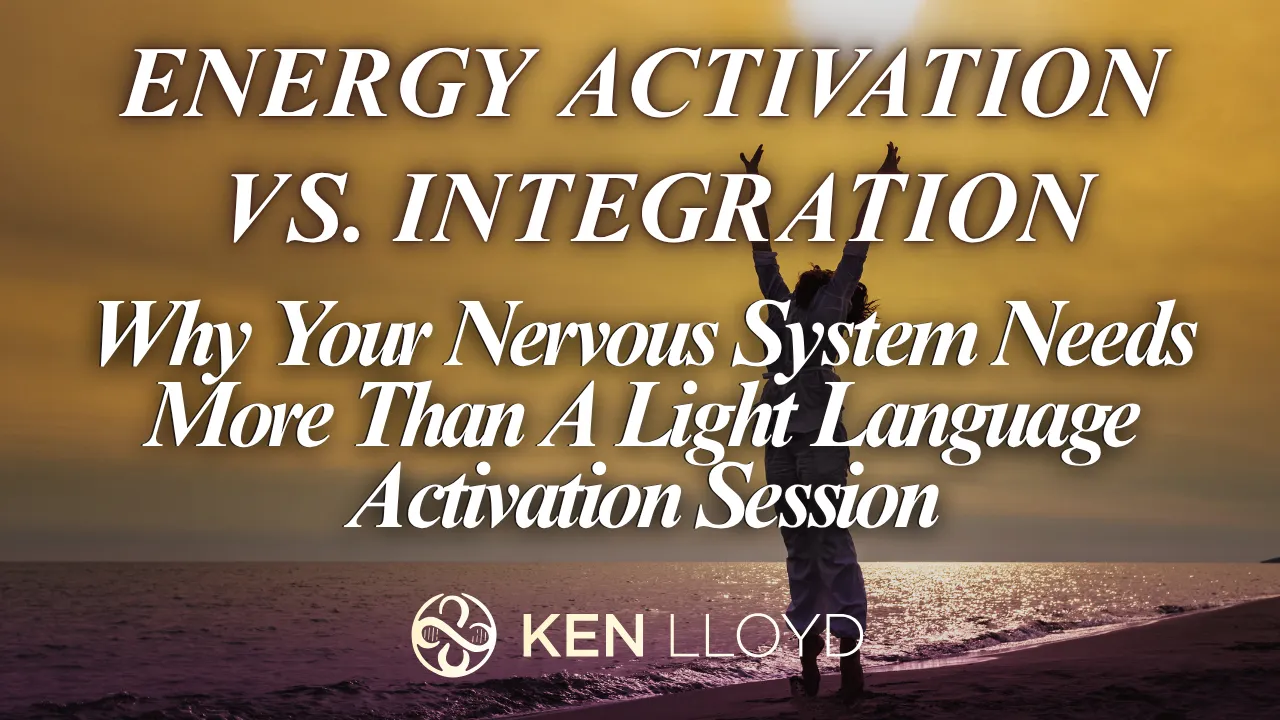
A powerful activation can feel life-changing in the moment, but the body doesn’t transform just because you felt intensity. The nervous system needs something very different to actually shift.
When I perform an activation, I am introducing new or higher frequency information into your field in a way the body can actually register. The nervous system is not imagining this. It reorganizes around the frequency it receives. Many people describe the moment as a spark, a wake-up, or a rush of energy because the system is encountering information it has not accessed before. And when new information enters the field, the system begins to move.
That movement is what you feel during an activation. It may show up as sudden insight, emotional waves, warmth in the chest, trembling, tears, or a sense of expansion. Activations open the subtle layers of the field, including consciousness, emotion, and stored patterning. What has been dormant or compressed begins to surface, and the deeper intelligence of the system becomes more available.
As soon as the activation touches your field, momentum begins. Stagnant energy loosens, emotions rise, and hidden patterns start to reveal themselves. This is why many people describe feeling reconnected to their higher self.
Here is what most people do not realise. The nervous system experiences activation as stimulation, not stability. Activation increases sensation and emotional volume. These shifts are essential to healing, but they also require internal capacity. When the activation brings in more movement than the system can regulate, overwhelm happens. This is why some people feel shaky, raw, or ungrounded afterwards. Nothing went wrong. The system simply opened faster than it could reorganize.
Integration is the stage where everything that the activation stirred begins to settle into the system in a way that feels grounded, supported, and safe. If the activation is the spark, integration is the rewiring. If the activation is the opening, integration is the anchoring.
Unlike activation, integration is slow, steady, and rhythmic. It meets the body at a pace the nervous system can actually handle. During integration, the system begins to process the stimulation from the activation without becoming overwhelmed. Breath deepens. Tension unwinds. Protective patterns begin releasing not in a dramatic wave, but in a gentle, regulated exhale.
This is one of the most misunderstood truths in frequency work: you cannot sustain an energetic opening without stabilising it in the body. The nervous system has a baseline, a default setting it returns to when it’s not responding to stress. If the baseline is dysregulated, anxious, collapsed, or braced, then even the most beautiful activation cannot create long-term change. Integration is the phase that builds a new baseline.
During integration, the nervous system rewrites the patterns it defaults to. Instead of returning to stress or overwhelm, it begins returning to clarity, coherence, and regulation. This baseline shift is what transforms lasting rather than temporary.
When someone receives a strong activation without follow-up integration, it is extremely common for the system to become overstimulated. Overstimulation simply means the activation brought in more movement than the nervous system could regulate.
This may show up as:
These symptoms do not mean the activation was harmful. They just indicate that the activation stirred more material than the system had the capacity to process.
Intensity amplifies whatever patterns are already present. If the body already has unresolved trauma, tight breath, hypervigilance, or chronic bracing in the muscles, activation can push these patterns to the surface more quickly than the system can reorganize them.
This is why grounding, breathwork, and coherent sensory input are essential after an activation. They help the system digest the intensity instead of being overwhelmed by it.
The human body stores unresolved stress in very predictable ways. These patterns include:
These patterns form because the stress cycle was never completed. The body is prepared to protect you and stays that way.
An activation can loosen these patterns. It can open the layers where stress is stored. But activation cannot complete the stress cycle on its own. It can only reveal what the system is holding.
Integration is what allows the body to actually release it.
The vagus nerve plays a central role here. It is responsible for shifting the body out of protection and into regulation. When the vagus nerve receives signals of safety, slow breath, rhythm, grounding, and coherent tone, it relaxes its grip on old patterns.
But when the vagus nerve receives too much stimulation too quickly, it becomes reactive. This is the moment people report feeling anxious, spaced out, or suddenly emotional after an activation.
Integration ensures the vagus nerve receives steady, gentle, regulated cues so that the stored material can dissolve safely rather than erupt all at once.
Light language functions through resonance. It interacts with the nervous system not through logic, but through vibration. The tones bypass analytical processing and communicate directly with the subconscious and energetic layers of the body.
During an activation, light language serves to:
Activation tones tend to be more stimulating, more upward-moving, and more potent in frequency complexity.
During integration, light language serves a different purpose:
Integration tones are slower, more rhythmic, and more spacious. They teach the body how to hold the shift without losing its center.
This difference in pacing and intention is why both activation and integration are needed; they are two halves of a complete transformation process.
When activation happens without follow-up support, the system often sends very clear signals:
These symptoms indicate that the system is trying to reorganize but does not have enough internal regulation to complete the process.
Your body is essentially saying:
“Slow down. Help me integrate. Help me feel safe enough to process this.”
This is when grounding, breathwork, gentle tone exposure, and slower frequency input become essential, the same tools I use in my own healing sessions to guide the system back into coherence.
When I guide an integration-focused session, the entire structure is designed to support regulation and safety from the beginning.
We begin with breath guidance, stillness, or slow rhythmic tone to signal to the body that it can release its protective patterns. This sets the foundation.
I bring in slow, coherent light language tones that influence breath, heart rhythm, and subconscious regulation. The system shifts from activation into deep coherence.
Clients often experience subtle but powerful somatic releases:
We end by anchoring the field so the body incorporates the frequency into its baseline rather than remaining open or overstimulated.
Integration is complete when the system feels clearer, calmer, more connected, and more stable than when we began.
For those seeking structured support, I offer light language healing focused on trauma release through coherent frequency, multidimensional tones, and steady nervous system guidance. My method is designed to help the system shift into regulation without overwhelm, creating a safe internal space for emotional patterns to soften.
I provide several ways to receive support depending on what feels most aligned for you:
Each option provides the body with a stable and grounded environment where trauma patterns can soften naturally. The system is guided gently, without force, allowing emotional release to unfold at a pace that feels safe.
True transformation unfolds when the nervous system feels supported enough to reorganize itself. Integration gives the system the steady cues it needs to soften old patterns and embody the changes initiated during activation. When the body receives consistent guidance and coherent frequency, it naturally shifts out of protection and into a more regulated, grounded state. This is where emotional clarity, inner stability, and lasting change become possible.
Discover how to effectively release trapped emotions and clear your energy with light language and KDC frequencies. Start your journey today!
Waking up to the same reality every single day is exhausting. You run the same mental loops, encounter the same frustrations, and end the day
Discover 12 effective techniques for empath energy protection. Learn quick rituals and grounding methods to maintain emotional balance today.

Discover how entity attachment removal can clear energetic blocks, ease emotional pain, and set healthier personal boundaries today.