How to Release Trapped Emotions with Light Language
Discover how to effectively release trapped emotions and clear your energy with light language and KDC frequencies. Start your journey today!

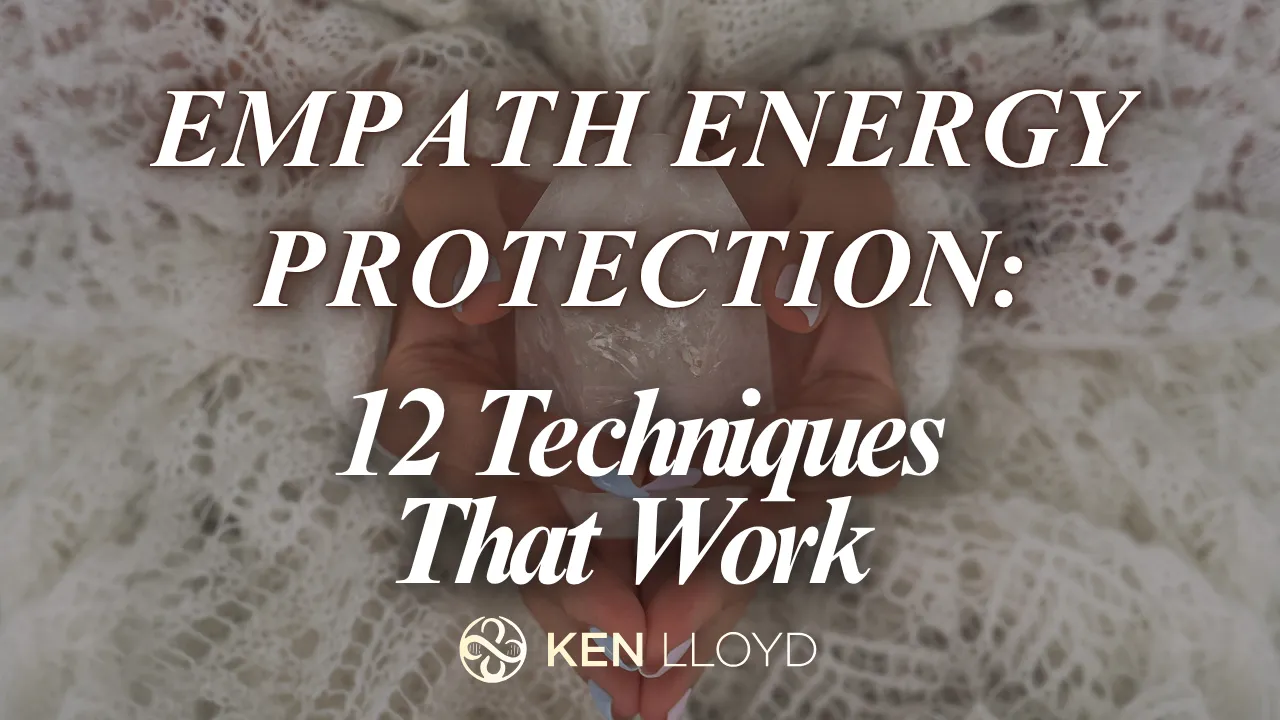
Six protections form the core of sustainable empath energy protection: shielding visualization, body-based grounding, breathwork resets, clear boundaries, quick clearing rituals, and daily resilience habits. Together, they let you stay fully present with others without carrying their emotional weight home. Practitioners like Judith Orloff, MD have long validated this short-list approach, and research on nervous-system regulation supports the body-based methods underneath them. You can start right now before finishing this article.
Quick actions you can take in under 60 seconds:
Pro Tip: Pre-shield before you walk into a known trigger, not after you’re already depleted. Thirty seconds of visualization in your car before entering a family gathering or a difficult meeting is far more effective than trying to rebuild your field mid-conversation.
These techniques move from fastest to most sustained. Use shielding and breathwork before or during a draining interaction; use grounding and clearing after. The micro-resets work in public, at your desk, or mid-conversation without anyone noticing.
Shielding is a 30–60 second mental practice that creates a felt sense of energetic boundary before you enter a draining environment.
Step-by-step:
If it feels forced at first, that’s normal. The effectiveness of shielding builds with repetition, much like any mental skill. Pair it with a physical anchor, like touching your sternum, so you can re-activate it quickly in public.
Your breath is the fastest lever you have over your nervous system, and it requires no equipment and no explanation to anyone around you.
Box breathing (for pre-contact calm): Inhale 4 counts, hold 4, exhale 4, hold 4. Two rounds shift your system toward parasympathetic regulation.

4-6-8 reset (for mid-drain recovery): Inhale 4, hold 6, exhale 8. The extended exhale activates the vagal brake, slowing the stress response within one or two cycles. Use this one when you feel someone else’s anxiety starting to land in your chest.
Naming a limit out loud creates a real-world anchor that reinforces the internal energetic one. A boundary stated clearly and calmly carries more protective weight than any visualization practiced in silence.
Scripts for common scenarios:
After a draining interaction, picture a cord of light connecting you to the other person. Visualize cutting it cleanly with a breath or a gesture, then see both ends dissolving into neutral light. This isn’t about severing the relationship; it’s about releasing the energetic residue of the exchange.

Emotional Freedom Technique (EFT) tapping uses acupressure points to discharge stuck emotional charge quickly. A 5-point sequence takes under two minutes.
Basic sequence:
Repeat the sequence twice, breathing normally. Many empaths find this more grounding than visualization alone because it engages the body directly.
Distancing doesn’t mean disconnecting from people you care about. It means creating enough internal space that their emotional state doesn’t override yours.
Practical ways to create that space:
Some people consistently leave you more depleted than others. Recognizing this pattern is protective information, not a judgment. Judith Orloff’s framework describes sensing your own limits as an immediate intervention: if you feel drained after every interaction with a specific person, that’s data.
Practical responses:
Mindfulness for empaths isn’t generic meditation. It’s the practice of noticing whose emotion you’re feeling before you respond to it.
A simple daily practice: at the end of each interaction, ask yourself, “Was I feeling this before the conversation started?” If the answer is no, it’s likely absorbed rather than yours. This single question, practiced consistently, builds the discernment that makes every other technique more effective.
Pro Tip: Set a phone reminder for 5 PM daily labeled “Whose is this?” It prompts a 60-second emotional audit before you carry the day’s residue into your evening.
The clearest sign of absorption is a mismatch: you feel something that doesn’t fit your current life circumstances, and it started after contact with a specific person. Your own emotions tend to build gradually and connect to identifiable events. Absorbed emotions arrive suddenly, often with a physical component, and lift when you leave the person’s presence.
Red flags checklist:
Immediate 3-step triage when you notice red flags:
Schedule a weekly emotional audit, perhaps Sunday evening, to track which people and environments consistently trigger absorption. Patterns that repeat over weeks are worth addressing with a professional.
Pro Tip: Keep a brief notes app log after draining interactions for two weeks. Patterns become obvious quickly, and that data helps you make informed decisions about where to invest your energy.
A note on mental health: if you’re experiencing persistent anxiety, depression, or dissociation that doesn’t lift with self-care, please reach out to a licensed mental-health professional. Energy practices support wellbeing; they don’t replace clinical care.
Daily grounding and boundary practice are the foundation of sustainable empath energy protection; clearing rituals and professional support build on that foundation when self-care alone isn’t enough.
| Point | Details |
|---|---|
| Start with grounding and shielding | A 5-minute morning practice of grounding and visualization prevents absorption before it starts. |
| Boundaries reduce ongoing drain | Proactive spoken limits are more sustainable than reactive clearing after every interaction. |
| Breaks protect empath bandwidth | Micro, meso, and macro breaks prevent accumulation; Asana data shows 11 hours saved monthly from meeting reorganization alone. |
| Red flags signal absorption, not your own state | Sudden mood shifts after contact, physical symptoms that ease when you leave, and feelings that don’t match your life are absorption markers. |
| Kenlloydofficial offers structured professional support | Ken Lloyd’s one-on-one sessions, group transmissions, and distance healing subscriptions provide guided clearing for empaths who need deeper help. |
The most common pattern isn’t a lack of technique. It’s people-pleasing rooted in early relational roles, where being attuned to others’ emotional states was how you stayed safe, earned love, or kept the peace. The absorption didn’t start as a spiritual problem. It started as an adaptive response.
The single mindset shift that changes everything: stop treating absorption as something that happens to you and start treating it as information your nervous system is offering. When you feel someone else’s anxiety land in your chest, that’s data. It tells you something about their state. It doesn’t obligate you to carry it, fix it, or make it go away.
That reframe, from obligation to information, is what makes every technique in this article actually stick. Without it, shielding feels like avoidance, boundaries feel like cruelty, and clearing feels like you’re doing something wrong by not holding space indefinitely. With it, protection becomes an act of care for both yourself and the people you’re trying to support.
If you recognize deeply entrenched patterns of absorption tied to early relationships, that’s worth exploring with a practitioner who works at the level of the nervous system and the energetic field. The Kenlloydofficial blog has additional resources on people-pleasing behaviors and the subconscious mechanisms underneath them.
Most empaths arrive at energy work after years of trying to manage absorption on their own, cycling through techniques that help temporarily but don’t address what’s underneath. Kenlloydofficial’s approach goes deeper: Ken works as an Energy Field Architect, identifying and clearing the specific blockages, stagnant trauma, and emotional burdens that keep your field porous in the first place.
Three ways his services directly support empath protection: one-on-one structured healing sessions that map your field and clear what self-care can’t reach; downloadable light language transmissions you can use between sessions for ongoing maintenance; and live group activations that provide collective energetic support at a lower price point. Distance healing subscriptions offer monthly clearing for empaths who want consistent support without booking individual sessions each time.
The next step is straightforward: visit the Energy Field Architect page to review session options and apply for a one-on-one session, or browse the free transmissions to experience the work before committing to a paid program.
Discover how to effectively release trapped emotions and clear your energy with light language and KDC frequencies. Start your journey today!
Waking up to the same reality every single day is exhausting. You run the same mental loops, encounter the same frustrations, and end the day

Discover how entity attachment removal can clear energetic blocks, ease emotional pain, and set healthier personal boundaries today.
Are you someone who regularly agrees to things when you don’t really want to go to them? Or do you always say “yes” to more