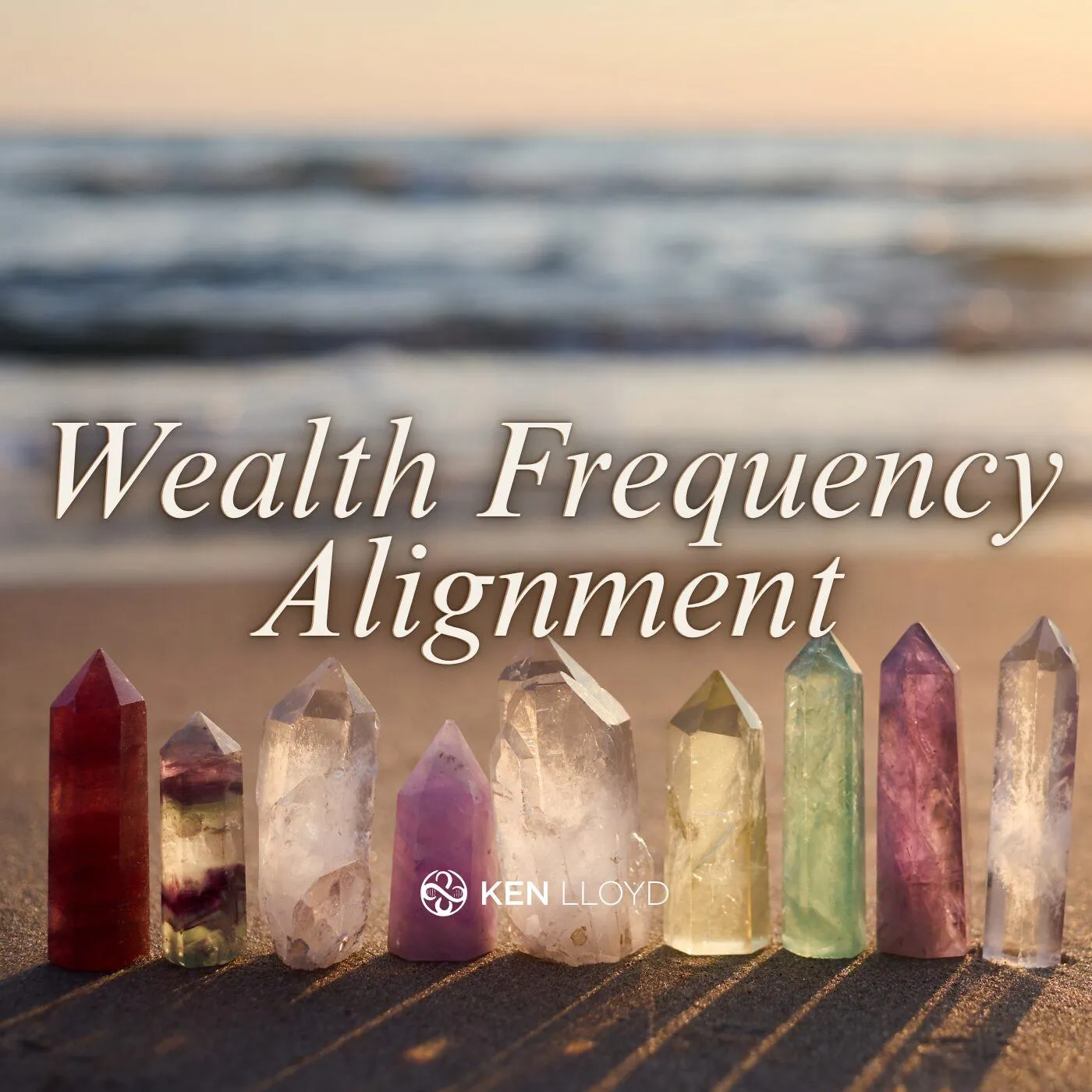
Wealth Frequency Alignment
$22.00
Wealth Frequency Alignment is a Ken Lloyd and KDC light language transmission created to support the stabilization of internal wealth patterns, emotional responses to money, and the relationship between stability and opportunity. This transmission works across mental, emotional, and nervous system structures that influence how wealth is received, managed, and sustained, supporting alignment with abundance across financial, relational, emotional, and physical areas of life.
Description
Wealth Is Not Just About Money. It Is About the Emotional State You Associate With Being Supported
When most people think about wealth, they imagine numbers in an account, financial freedom, or the ability to purchase what they want. But when you look deeper, what people are truly seeking is not the money itself. What they are seeking are the emotional states they believe wealth will create.
For many individuals, wealth represents:
- Feeling safe
- Feeling supported
- Feeling calm instead of stressed
- Feeling confident about the future
- Feeling secure when unexpected situations arise
- Feeling capable rather than overwhelmed
- Feeling relief instead of pressure
These emotional experiences are what people associate with wealth, even if they do not consciously recognize it.
Most people are not chasing money because they want currency. They are chasing the feeling of breathing easier. The feeling of knowing their needs will be met. The feeling of stability when life becomes unpredictable.
One of the most misunderstood aspects of wealth is the belief that these emotional states become available only after financial success occurs. In reality, many individuals who maintain long-term wealth understand something very different.
They recognize that the emotional frequency of safety, confidence, and stability must exist first before external wealth becomes sustainable.
That is why Ken and the KDC created this transmission to support the stabilization of the emotional frequency associated with wealth, restore confidence during uncertainty, and help individuals reconnect with the internal states that allow resources to be received and sustained.
Receive this powerful Ken Lloyd and KDC transmission to support emotional stability around wealth so that safety, confidence, and calm become accessible even during uncertainty.
The Moment Everything Feels Uncertain Is Often the Most Important Moment
Many individuals have experienced moments where they felt confident about their financial direction. They may have believed that things were improving, that opportunities were coming, or that stability was possible.
But the true test of wealth alignment does not occur when life feels stable. It occurs when something unexpected happens.
It may be:
- Losing an opportunity that felt certain
- Receiving an unexpected expense
- Experiencing sudden financial pressure
- Facing uncertainty about income
- Watching plans change without warning
In these moments, confidence often disappears quickly. Calm turns into stress. Trust turns into fear.
You may notice internal thoughts such as:
“I knew this wouldn’t work.”
“Money never stays with me.”
“Things always fall apart.”
“I am not meant to have stability.”
These moments are highly sensitive turning points. When fear replaces stability, the nervous system begins to associate money and opportunity with stress rather than safety.
Over time, this creates a snowball effect. One stressful experience leads to fear. Fear leads to reactive decisions. Reactive decisions create instability. Instability reinforces fear.
This cycle does not begin with money. It begins with emotional regulation.
True wealth alignment is not about pretending everything is fine. It is about stabilizing yourself during disruption instead of collapsing into panic.
Receive this transmission to support the restoration of internal stability during moments when uncertainty would normally create stress or fear.
Wealth Exists in More Forms Than Financial Currency Alone
While financial resources are one visible expression of wealth, many individuals overlook the additional forms of abundance that directly influence life stability.
True wealth can include:
- Financial wealth that supports resources and opportunity
- Emotional wealth that supports calm and clear decision-making
- Relational wealth that supports trust and connection
- Physical wealth expressed through health and endurance
- Time wealth that allows rest, creativity, and recovery
- Environmental wealth that supports safety and function
- Opportunity wealth that supports growth and expansion
Many people pursue financial gain without stabilizing these other forms of wealth, which often results in cycles of growth followed by loss.
Wealth frequency alignment supports the stabilization of these interconnected systems so that growth becomes sustainable rather than temporary.
Signs You May Be Carrying Patterns That Interfere With Wealth Alignment
Wealth-related patterns are often normalized through repeated experiences and may not be immediately recognized.
This transmission may support you if you notice:
- Feeling anxious when thinking about finances
- Avoiding financial decisions due to stress
- Feeling like money comes in but does not stay
- Experiencing repeated financial instability
- Feeling guilt around receiving money or support
- Feeling uncomfortable discussing finances
- Feeling pressure when managing resources
- Feeling uncertain about long-term planning
- Hesitating to pursue opportunities
- Feeling that stability is always temporary
- Feeling emotionally overwhelmed when unexpected expenses occur
Many of these patterns formed during earlier experiences where financial tension was present in the environment. These patterns remain active within the nervous system long after the original experiences have passed.
Where Wealth Patterns Actually Live Within the System
Wealth patterns are not only mental beliefs. They are stored across multiple layers of the body and behavior.
They exist:
- In the nervous system as stress responses tied to financial uncertainty
- In the mind as beliefs about scarcity or limitation
- In the body as tension associated with responsibility
- In behavior as hesitation or impulsivity
- In relationships as conflict or avoidance around money
Over time, these patterns influence daily decisions in ways that may not be obvious.
Someone may avoid opportunity because expansion feels unsafe. Another individual may overspend because stress creates a temporary sense of relief.
These responses are not random. They are learned structural behaviors.
Receive this powerful KDC transmission to support the release of stored financial stress responses and restore internal regulation around resources.
What Ken Is Working On During This Transmission
During this transmission, Ken and the KDC are working across multiple structural layers that influence wealth stability and resource flow.
Releasing Inherited Scarcity Patterns
Many individuals carry generational stress responses connected to money and survival. This transmission supports releasing inherited tension associated with scarcity and instability.
Stabilizing the Nervous System During Financial Stress
Financial responsibility can activate survival responses. This transmission supports stabilizing the nervous system so decision-making becomes grounded rather than reactive.
Restoring Comfort With Receiving Resources
Some individuals experience discomfort when receiving money, support, or opportunity. This transmission supports recalibrating the ability to receive without internal resistance.
Clearing Internalized Worth and Compensation Patterns
Beliefs about worth often influence earning potential and opportunity acceptance. This transmission supports releasing limiting beliefs connected to deservingness.
Supporting Long-Term Stability Rather Than Short-Term Gain
Many individuals experience cycles of gain followed by loss. This transmission supports internal structures required to maintain progress over time.
Strengthening Awareness of Opportunity Recognition
Wealth requires the ability to recognize available opportunity. This transmission supports clarity and awareness around resource movement.
Stabilizing Emotional Response to Financial Change
Sudden change often triggers fear-based reactions. This transmission supports emotional stability during unexpected financial shifts.
What May Change For You After This Transmission
As internal wealth structures reorganize, many individuals notice changes that extend into multiple areas of life.
You may notice:
- Reduced stress when thinking about finances
- Increased clarity in decision-making
- Greater comfort managing resources
- Improved emotional stability during financial pressure
- Increased willingness to pursue opportunity
- Less hesitation around planning
- Greater confidence in handling unexpected expenses
- Improved consistency in financial habits
- Stronger sense of long-term stability
Many individuals also notice changes beyond finances, including:
- Improved emotional regulation
- More stable relationships around shared resources
- Increased confidence in daily decisions
- Greater sense of internal support
- Increased ability to remain calm during uncertainty
These changes occur because internal stability creates the conditions required for sustainable growth.